One in Seven Diabetic Teens Is Now on a GLP-1. What Happens When Obesity Catches Up?

Benefits managers spend a lot of time considering GLP-1s for adults. Four years of claims data tell a story most haven't considered yet: GLP-1s for kids.
From 2022 to 2025, adolescent GLP-1 spend and script volume both more than doubled, even as the number of members on these medications grew more modestly; adolescents on GLP-1s are staying on them longer and using them more intensively, at higher cost per person every year. And the obesity disease burden driving future demand keeps growing.
How Nomi Analyzed Adolescent GLP-1 Claims
Nomi analyzed four years of GLP-1 prescription claims for adolescent members ages 12–17 across a national book of self-insured employer plans, covering calendar years 2022 through 2025. We tracked member counts, script volume, spend, and diagnosis mix across the full period.
FDA Approval and Clinical Guidelines for Adolescent GLP-1s
The FDA first approved GLP-1s for adolescents with type 2 diabetes in 2019. Approvals for obesity management in adolescents 12 and older followed in 2020 and again in 2022, both for use alongside lifestyle changes in adolescents with a BMI at or above the 95th percentile for their age and sex. In 2023, the American Academy of Pediatrics issued clinical guidelines recommending GLP-1s for adolescents 12 and older with obesity. Prescribing has been building since.
Adolescent GLP-1 Spend Grew 111% From 2022 to 2025
- GLP-1 adoption among adolescent members grew more than 60% from 2022 to 2025
- Total spend grew 111%
- Scripts per member up 30%
- Cost per member up 32%, driven by how intensively adolescents are using these medications rather than by higher cost per script
GLP-1 Adoption Among Diabetic Teens More Than Tripled
Diabetes shows the strongest trend.
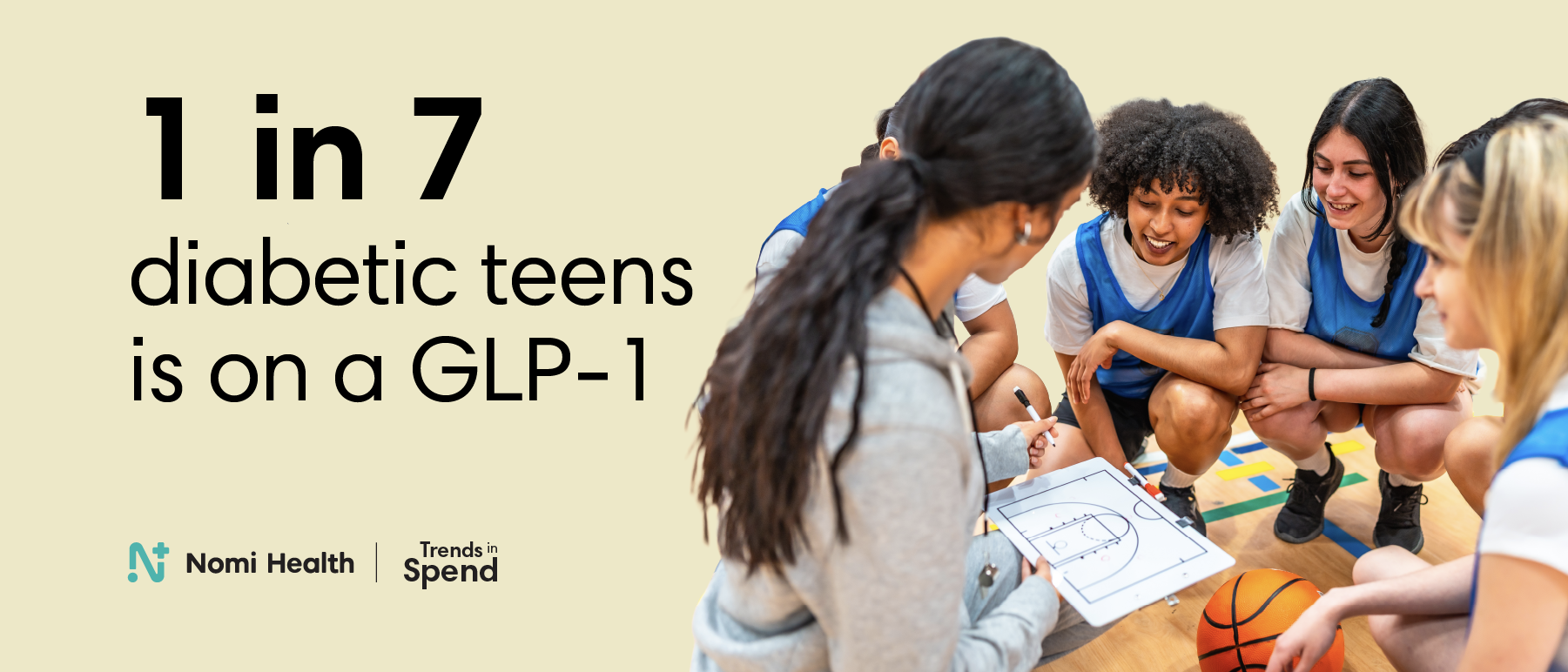
GLP-1 adoption among diabetic teens more than tripled. In 2022, 4.2% of adolescent members with a type 2 diabetes diagnosis had a GLP-1 prescription. By 2025 that figure reached 14.1%; roughly 1 in 7 diabetic teens was on a GLP-1.
At the same time, GLP-1 prescribing also became more diabetes-concentrated. In 2022, diabetic teens made up 52% of all adolescent GLP-1 users. By 2025 that share grew to 61%. As overall adolescent GLP-1 use expanded, diabetes drove more and more of it.
For self-funded employers, these two findings together point to one reality: adolescent diabetes and GLP-1 spend are increasingly linked, and that link strengthened over the period from 2022 to 2025.
Fewer Than 1 in 150 Obese Teens Is on a GLP-1
Diabetes established the pattern. Obesity is the open question.
GLP-1 treatment among obese adolescent members remains low. In 2022, 0.18% of adolescent members with an obesity diagnosis had a GLP-1 prescription. By 2025 that figure reached 0.44%. Fewer than 1 in 150 obese teens is on a GLP-1.
Meanwhile the disease burden keeps climbing. Diagnosed obesity prevalence among adolescent members grew 20% from 2022 to 2025.
The distance between disease prevalence and current prescribing rates is what makes this a cost planning question for self-funded employers. Diabetes penetration reached 14.1% by 2025. Obesity sits at 0.44%. The conditions that drove the diabetes adoption curve are present for obesity too: a growing diagnosed population, FDA approval, and evolving clinical guidelines. If obesity prescribing follows a similar trajectory, the cost implications for self-funded employers would be significant.
What Self-Funded Employers Should Do Now
1. Pull your adolescent GLP-1 claims across at least four years. Headcount trends and cost trends are moving in different directions, and you need both to understand your exposure.
2. Check for support structures. Clinical guidelines call for behavioral counseling and lifestyle support alongside these prescriptions. Coverage without those adjuncts may leave members underserved.
3. Plan for the gap. Rising obesity prevalence and low treatment rates represent real future cost exposure. Model the scenario before it becomes a budget surprise.
Key Takeaways for Benefits Managers
GLP-1s for adolescents are already a measurable, multi-year cost driver in employer-sponsored plans. The diabetes data shows what an adoption shift looks like when it happens. The obesity data shows how much room there is for one. The employers who understand both will be the ones who can plan ahead.
Frequently Asked Questions
How many teens with type 2 diabetes are now on a GLP-1?
Roughly 1 in 7. In 2022, 4.2% of adolescent members with a type 2 diabetes diagnosis had a GLP-1 prescription. By 2025 that figure reached 14.1% - a more than threefold increase in four years.
How much has adolescent GLP-1 spend grown for self-funded employers?
Total adolescent GLP-1 spend more than doubled from 2022 to 2025, growing 111%. Cost per member grew 32% over the same period, driven by more intensive use, not higher per-script costs.
What percentage of obese teens are currently on a GLP-1?
Fewer than 1 in 150. Despite FDA approval and clinical guidelines supporting GLP-1 use for adolescent obesity, only 0.44% of adolescent members with an obesity diagnosis had a GLP-1 prescription in 2025.
How is adolescent obesity prevalence trending in employer plans?
Diagnosed obesity prevalence among adolescent members grew 20% from 2022 to 2025. With prescribing rates still below 0.5%, the gap between disease burden and current treatment represents real future cost exposure for self-funded employers.
What should self-funded employers do now?
Three things: pull adolescent GLP-1 claims across at least four years to see how headcount and cost trends are diverging; confirm coverage includes behavioral counseling alongside prescriptions; and model the cost impact of rising obesity prescribing rates before it becomes a budget surprise.
Subscribe to Trends in Spend. Follow Nomi Health on LinkedIn.